Laundry Below Deck: Ellis Dryers Aboard the USS North Carolina
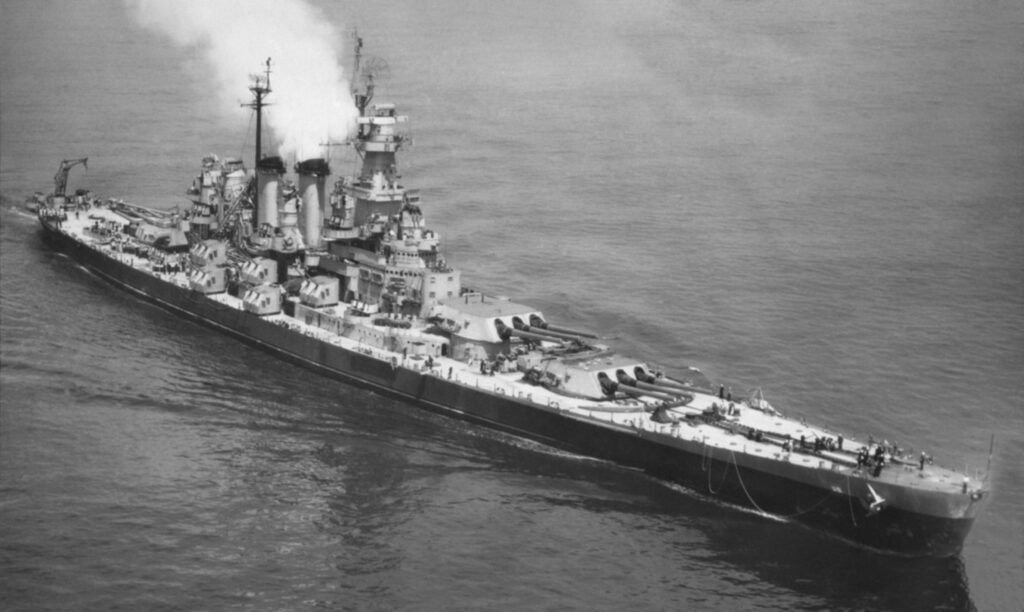
Most people don’t expect to find an industrial laundry inside a battleship.
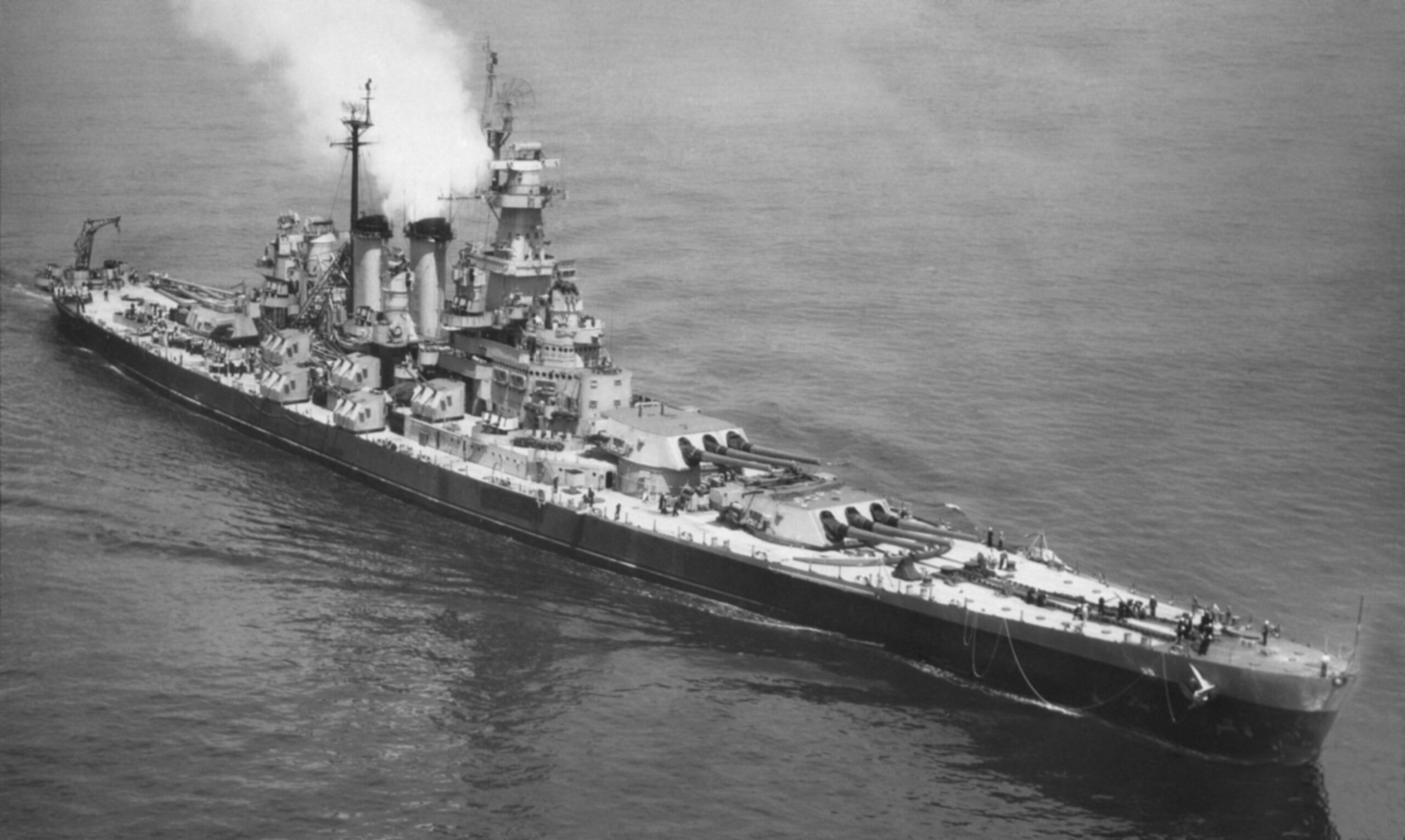
But deep inside the USS North Carolina (BB-55), below the armored decks and far from the main guns, there is a fully equipped laundry room. It once ran nearly nonstop.
For the more than 2,300 sailors who served onboard during World War II, laundry was not a convenience. It was part of keeping the ship operational.
A Floating Operation That Could Not Fall Behind
A battleship functioned like a small, self-contained city. Crews lived onboard for extended periods, often weeks or months at sea, without access to shore-based support.
That meant everything had to be handled onboard, including laundry.
The ship’s laundry processed:
- uniforms
- bedding and blankets
- towels
- medical linens
- galley textiles
With thousands of sailors cycling through daily operations, laundry had to move continuously. There was no room for backlog. Clean textiles supported hygiene, safety, and readiness across the ship.
Built to Run in Conditions Most Facilities Never Face
Operating an industrial laundry below deck introduced challenges that most facilities never encounter.
Equipment had to run in:
- confined spaces
- constant vibration from propulsion systems
- humid, salt-heavy air
- limited maintenance conditions
If something went down, there was no service call. The crew had to keep it running.
Steam was central to many shipboard systems. Battleships generated large amounts of steam for propulsion and auxiliary operations, and that same resource also supported shipboard services, including the laundry. Steam powered processes such as drying and pressing allowed the crew to keep textiles moving through the system efficiently despite the constraints of operating below deck.
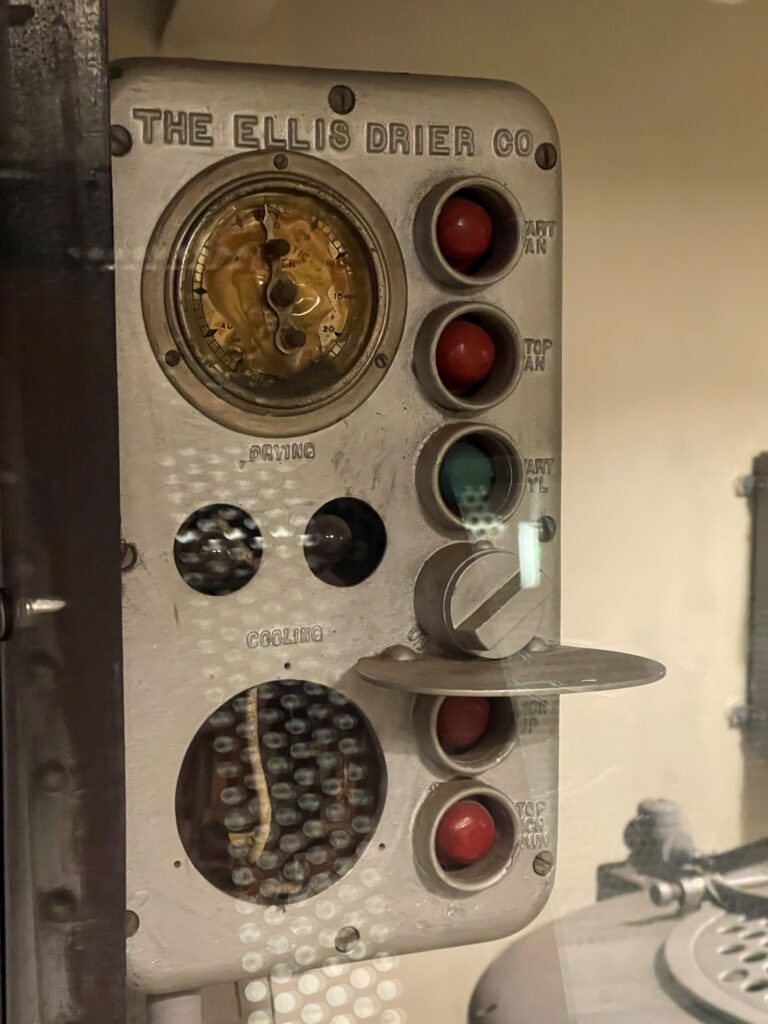
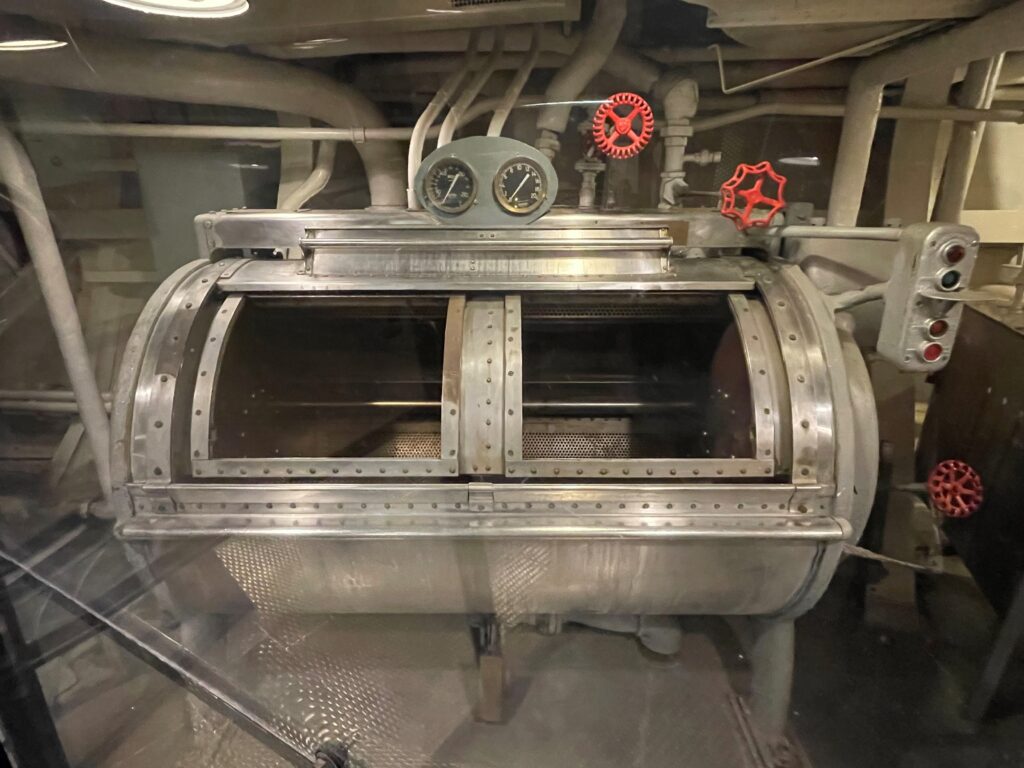
Control panel from an Ellis Drier Co. dryer installed aboard the USS North Carolina (BB-55), still preserved as part of the ship’s exhibit.
The Ellis Connection
What makes this story especially relevant today is the equipment behind that operation.
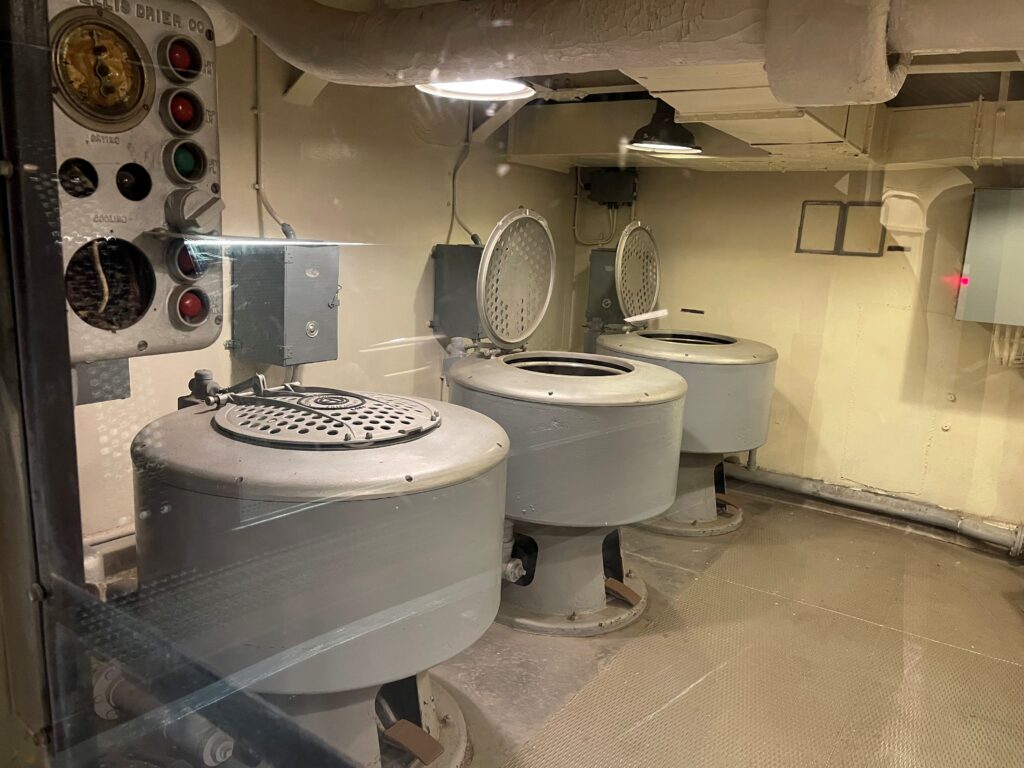
The laundry aboard the USS North Carolina included dryers manufactured by Ellis Drier Co. These were not light-duty machines. They were built for institutional and industrial laundry environments where consistent operation mattered.
Even more notable, that equipment still remains onboard today as part of the ship’s exhibit in Wilmington, North Carolina.
That is a rare piece of industry history. Equipment designed to support wartime operations is still visible decades later.
What Made It Work
Equipment installed on a battleship had to meet a different standard.
It needed to:
- operate continuously
- handle heavy loads
- perform in unstable conditions
- remain serviceable with limited resources
Mechanical durability mattered. Simplicity mattered. The ability to keep running without constant intervention mattered.
These are not abstract qualities. They were requirements.
And they are still relevant.
Then and Now, the Demands Are Not That Different
The environment has changed, but the pressure has not.
Modern laundry operations still face:
- staffing limitations
- tight production schedules
- high throughput demands
- limited tolerance for downtime
Whether it is a plant running multiple shifts or a facility managing peak demand, the expectation is the same. Equipment needs to run, and it needs to keep running.
The scale may be different. The technology may be more advanced. But the operational reality is familiar.
A Reminder of What Reliability Really Means
The laundry room inside the USS North Carolina is easy to overlook.
It does not have the visual impact of the ship’s guns or armor. But it tells a different kind of story. One about the systems that quietly supported thousands of people every day.
Industrial laundry equipment has operated in some of the most demanding environments imaginable. A WWII battleship is one of them.
That history is still sitting below deck.
And it raises a simple question.
Where does your operation depend on equipment that cannot go down?
Contact Us
We are here to answer your questions about water treatment, water heaters, and/or laundry equipment. Whether you need to replace existing equipment or engineer a whole new solution, contact EllisLudell for a solution right for you.
Related Blogs
Your Hot Water System Isn’t Failing. It’s Falling Behind.
It’s the end of a sanitation cycle. Multiple hose stations are running, the line needs to turn,…
Laundry Below Deck: Ellis Dryers Aboard the USS North Carolina
Most people don’t expect to find an industrial laundry inside a battleship. But deep inside the USS…
Why Sanitation Hot Water Reliability Matters More Than Most Food Plants Realize
Sanitation only works when hot water keeps up. That sounds simple. But in food and beverage plants,…
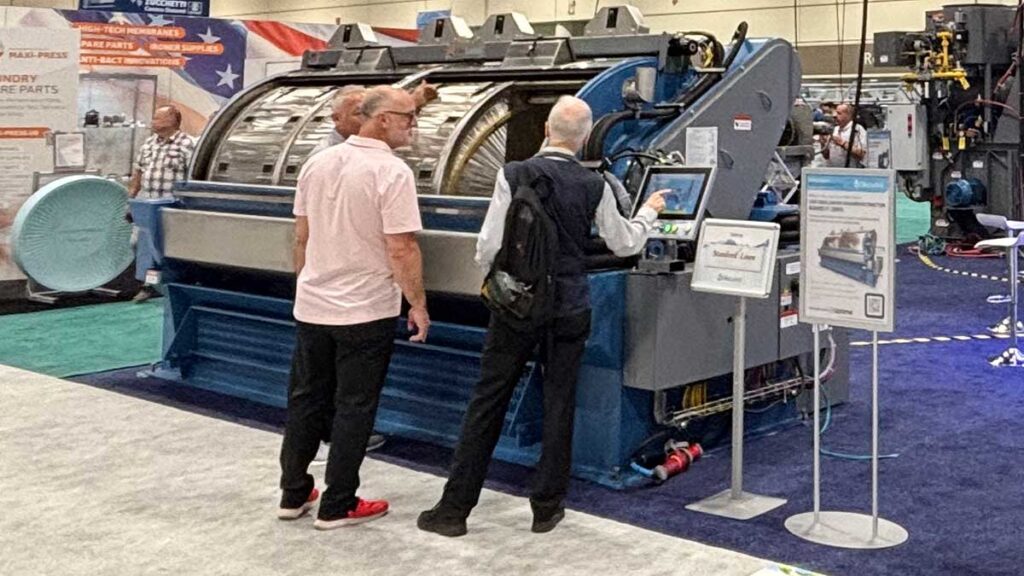
Clean Show 2025 Recap: The Sideloader Leads the Way
Clean Show 2025 proved once again that EllisLudell is a force in industrial laundry. From the moment…
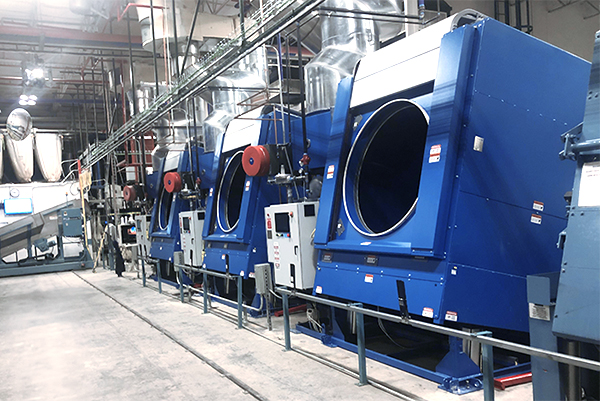
Whisper Dryer: Quiet Power That Speaks Volumes
Some dryers make noise. This one makes results. The EllisLudell Whisper Dryer is not just built for…
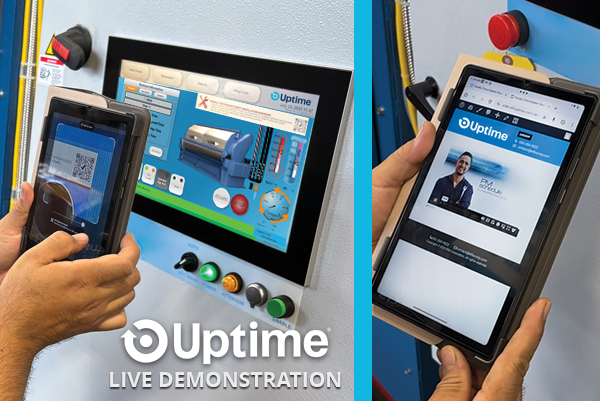
Uptime® – Equipment That Knows Exactly What to Do
Some machines run. Others think. Then there is the kind that changes how your team works from…
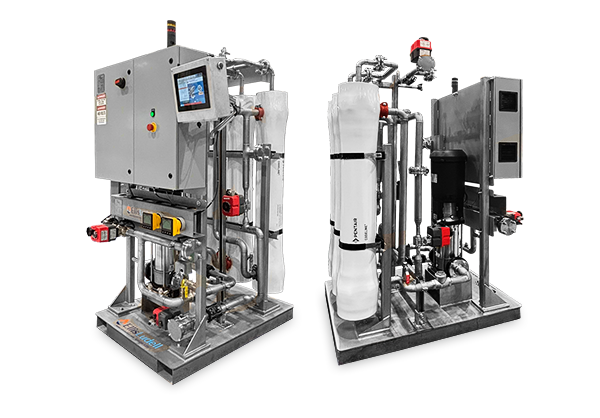
The Smarter Way to Clean Water Starts Here. Where Water Is Not Just Clean, It Is Competitive.
You do not just need water filtration. You need water control. You need fewer chemicals in your…
This Is What Intelligent Laundry Looks Like. Meet the Sideloader Built to Work
Let’s cut to it. You’re not in this industry for fluff. You need machines that show up,…
Why EllisLudell’s Certified DCWH Sets a Higher Standard
See It First at The Clean Show What you’ll see at booth 2811 at The Clean Show…
The Cost of Cutting Corners in Industrial Laundry: What You Risk with a Non-Certified Water Heater
In industrial laundry operations, cost and lead time often drive equipment decisions. But when your water heating…