Direct Contact Water Heater for High-Demand Industrial Operations
Instant, high-capacity process hot water that supports production, compliance, and operational stability.

How Direct Contact Water Heating Works and Why It Matters for Your Operation
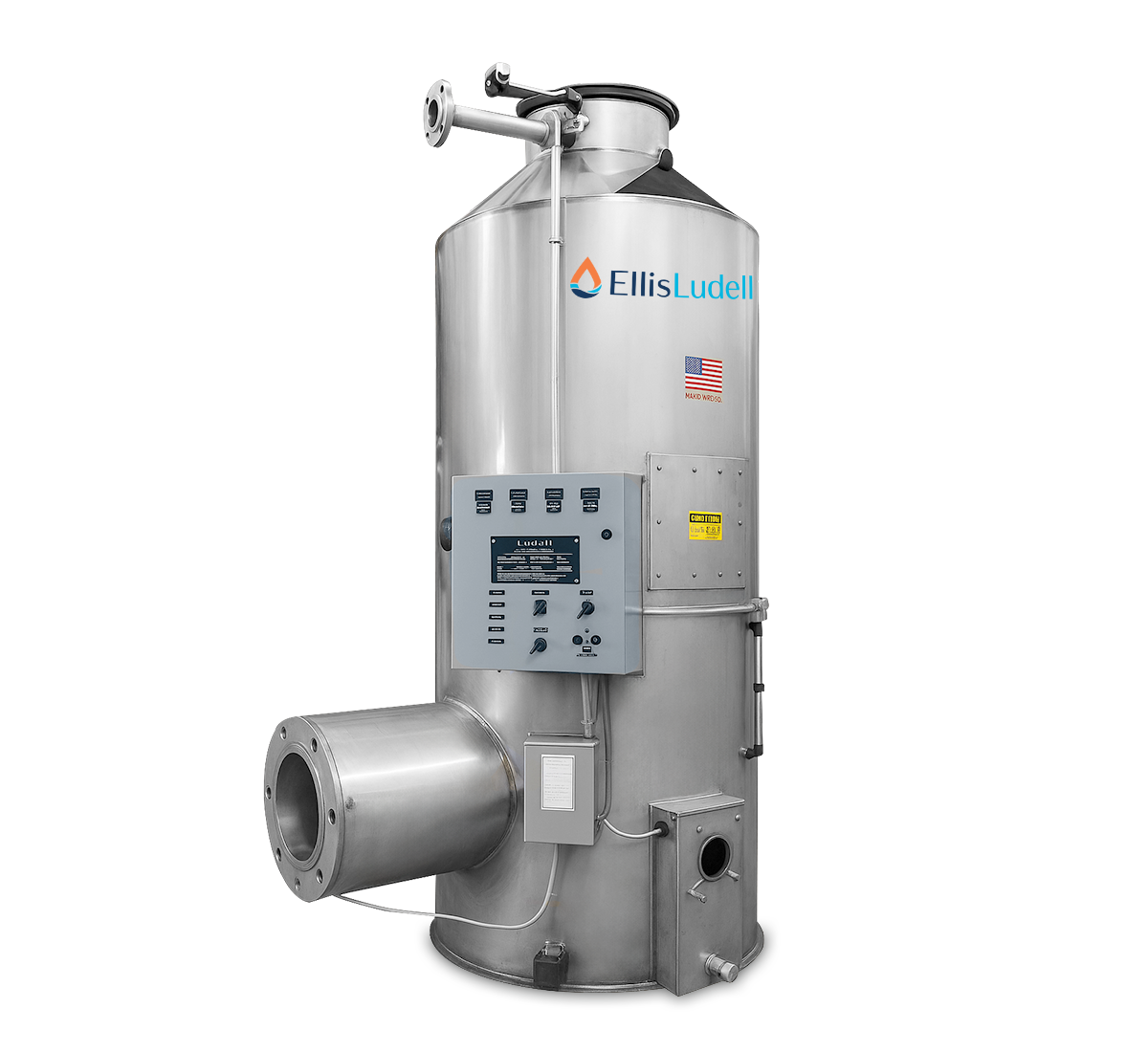
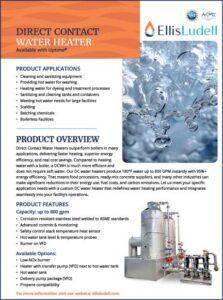
A direct contact water heater produces hot process water by heating it at the moment it is needed, rather than storing it in advance. Fuel is burned inside the unit, and the heat from that combustion is transferred directly into the incoming water as it flows through the system.
Because there is no heat exchanger or storage tank in between, heat transfer happens immediately. This allows the system to respond quickly to demand changes, maintain consistent outlet temperatures during production, and operate at very high efficiency with fewer components in the overall water-heating system.
Does your hot water system respond as fast as your operation demands?

NSF-Certified Water Heating for Direct Contact Applications
When water comes into direct contact with products, equipment, or processes, certification matters. EllisLudell Direct Contact Water Heaters are NSF-certified for direct contact water heating, supporting food safety and regulatory compliance in controlled environments.
System Capacity and Operating Range
- 190 - 800 GPM Capacity
- 750,000 - 54 Million BTU/Hr
Where Direct Contact Water Heating Fits Best
Direct contact water heating is commonly used in operations that require:
-
High volumes of process or sanitary hot water to 500gpm
-
Rapid response to demand spikes
-
Consistent temperature control during production
-
Simplified utility systems with fewer components
These systems are used across food processing, industrial laundry, manufacturing, and other high-demand industrial environments.
Not sure if a direct contact system is the right fit?
Direct Contact Water Heating Compared to Boiler-Based Systems
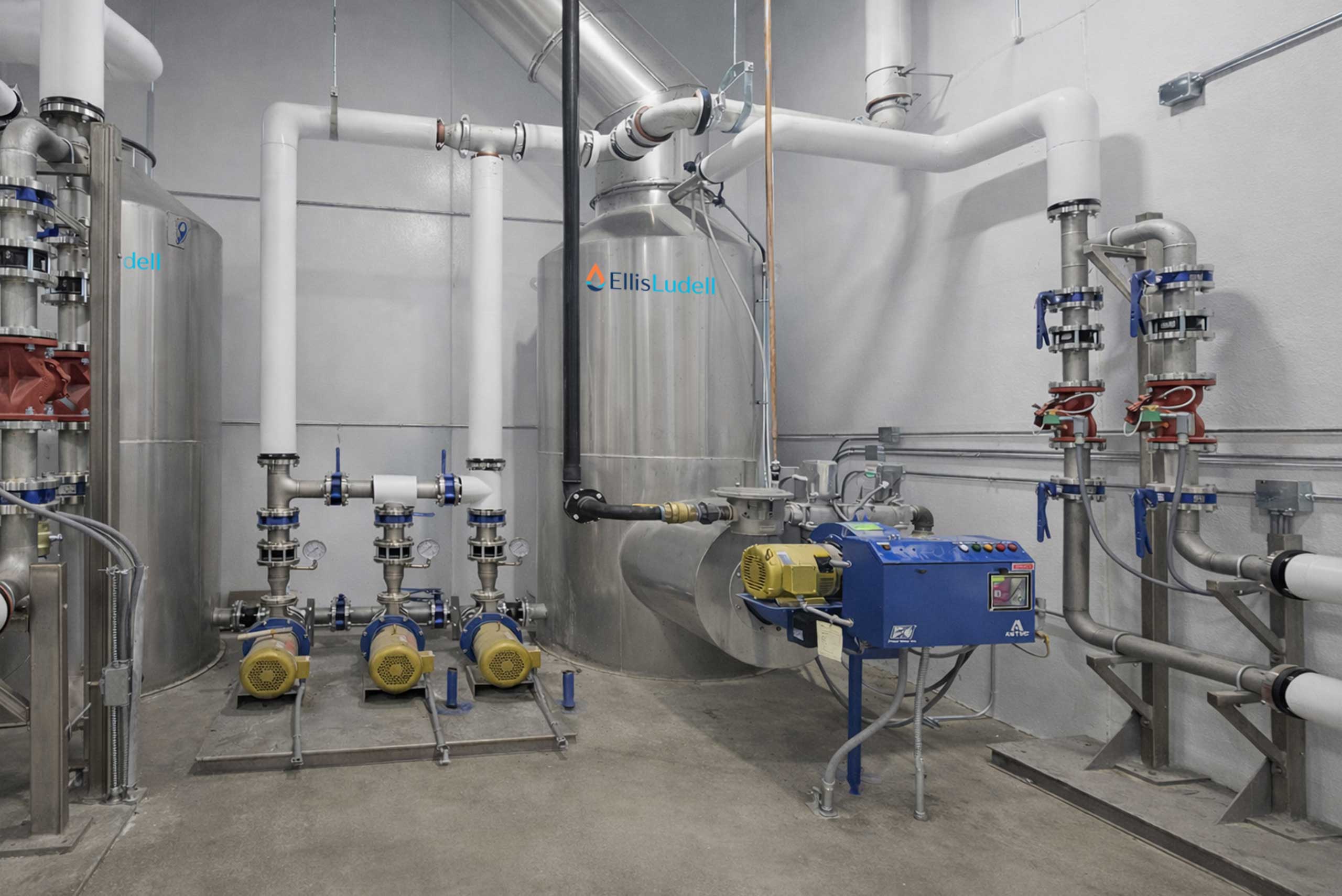
Traditional boiler systems heat water indirectly and rely on storage and recovery time to meet demand. This approach works well in steady, predictable applications but can struggle when hot water demand changes quickly or increases beyond the system’s recovery rate.
Direct contact water heating takes a different approach. By transferring heat directly into the incoming water, the system produces hot process water as it is needed, without relying on storage tanks or long recovery cycles.
Key Differences in Practice
-
System Complexity
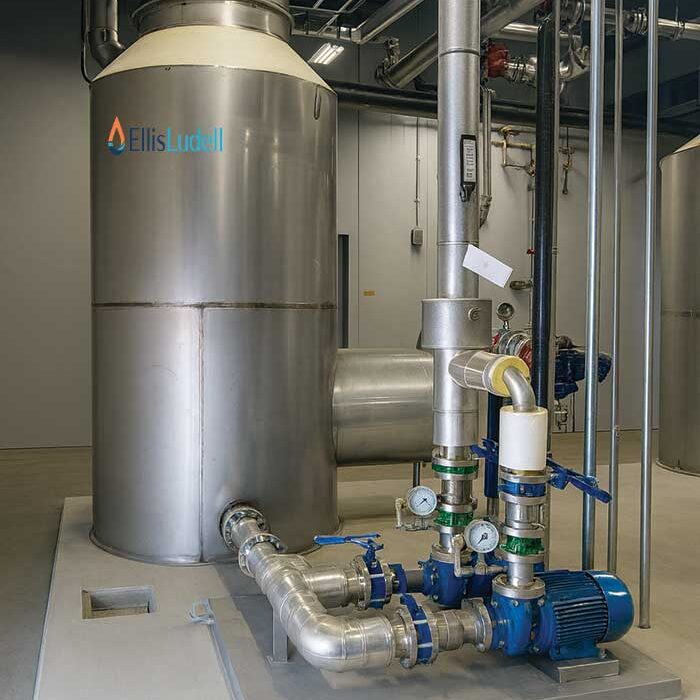
Fewer components such as storage tanks and secondary heat exchangers can simplify system layouts and reduce maintenance points.
-
Fit for High-Demand Operations
Direct contact water heating is often better suited for applications with variable or continuous hot water demand, where consistent outlet temperature and fast response are critical.
Have you compared how your boiler actually performs against our Direct Contact Water Heater?
Technical Documentation
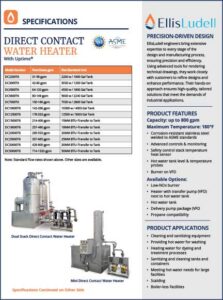
Detailed component-level information is available in the technical documentation below.

Supporting Reliable Operation Beyond the Equipment
Reliable hot water depends on more than the water heater alone. Once a direct contact system is in place, ongoing visibility into operating conditions, maintenance needs, and system behavior becomes essential to keeping production running smoothly.
EllisLudell Uptime® is a practical operations support platform designed for the plant floor. It connects real time equipment operating insight with clear, role based video guidance, delivered directly at the machine where work is performed.
Operators and maintenance teams access step-by-step maintenance videos, equipment specific procedures, and performance information exactly when they need it. By putting expert knowledge and system data at the point of use, Uptime helps teams diagnose issues faster, reduce lockout time, and maintain consistent operation across shifts and experience levels.
Maintenance and Training at the Machine with Uptime®
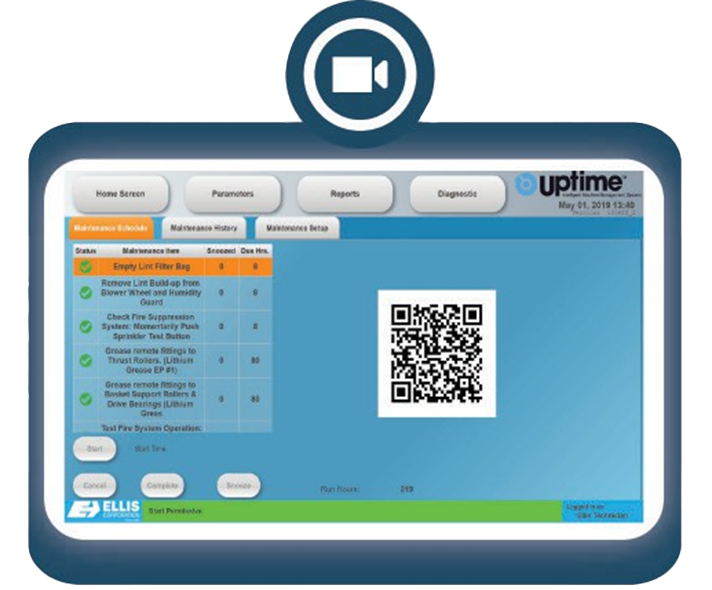
Uptime supports both maintenance and training directly at the equipment. Maintenance teams scan a QR code at the machine to access guided video instructions specific to that system. These videos, along with system insight, help teams prioritize what needs attention, support new technicians as they learn the system, and keep critical knowledge close to the equipment instead of buried in manuals or tribal experience.
Rather than replacing existing maintenance practices, Uptime reinforces them by making guidance accessible during real production conditions, not after the fact.
Does critical maintenance knowledge stay with your equipment as teams change?
Maintenance Video Library
Simply scan the QR code on your Uptime device to access step-by-step maintenance tutorials, enabling quicker troubleshooting and repair guidance right from the production floor.
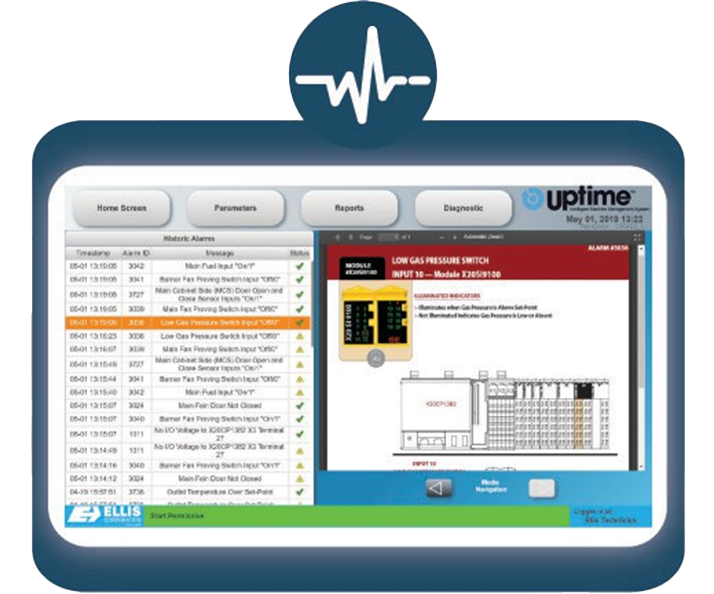
Critical Alerts
Uptime® provides critical alerts when problems arise, along with highly visual step-by-step troubleshooting instructions for efficient resolution
Preventive Maintenance Recommendations
Uptime® provides proactive maintenance recommendations to keep your machine up and running at peak performance.
Real-Time Performance Insights
Uptime® collects and analyzes operational data to optimize machine efficiency and support informed decision-making.
Remote Accessibility
With client authorization, EllisLudell securely analyzes and troubleshoot your systems remotely, ensuring efficient support from any location.
Built-In Data Retention
Uptime® helps you address workforce challenges such as retirements and skills transfer by capturing and preserving essential knowledge and making it available on-demand.